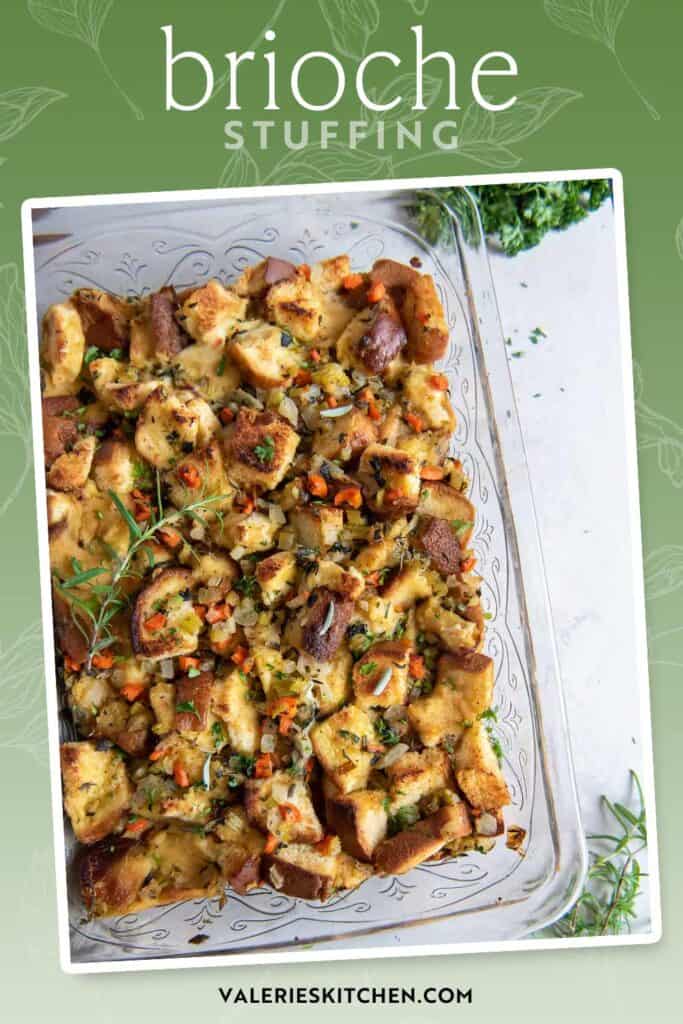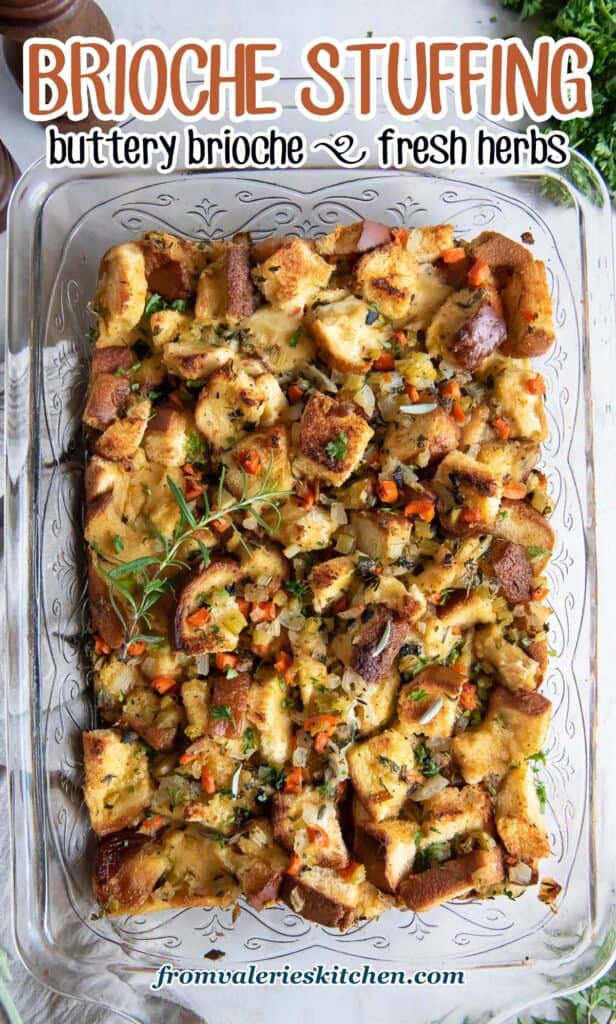
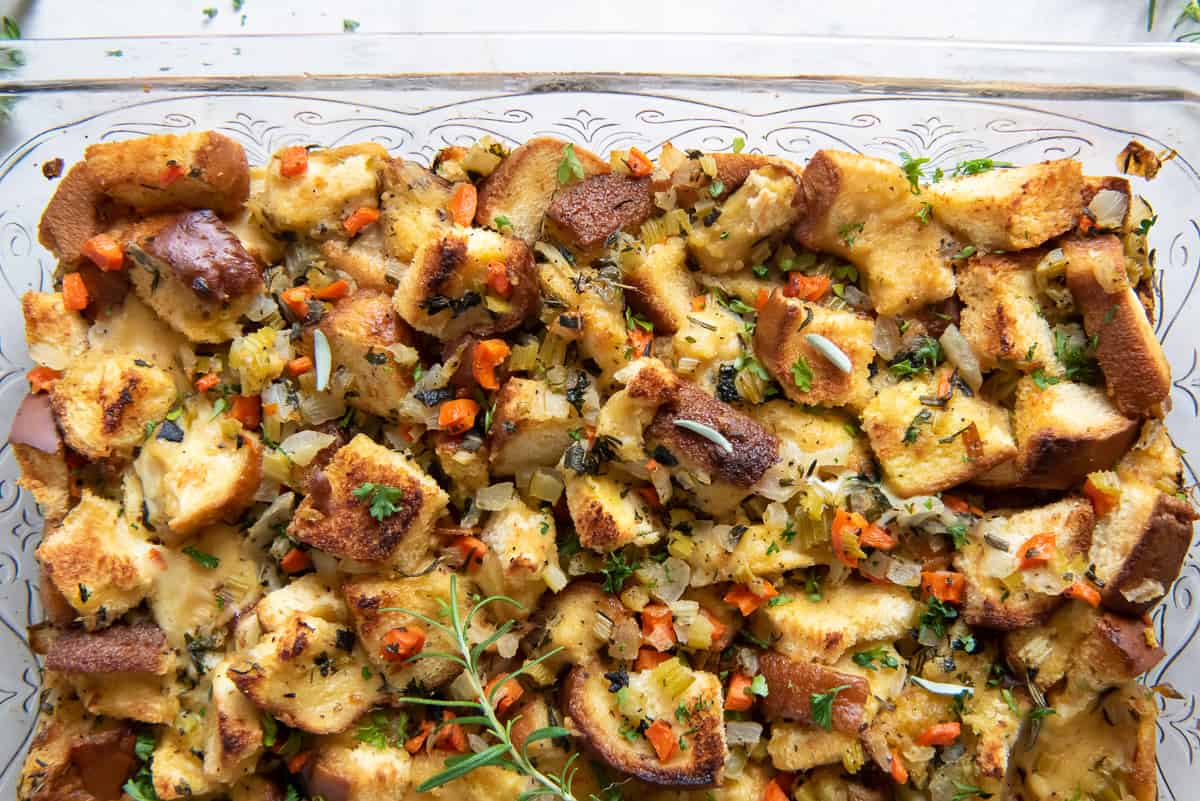
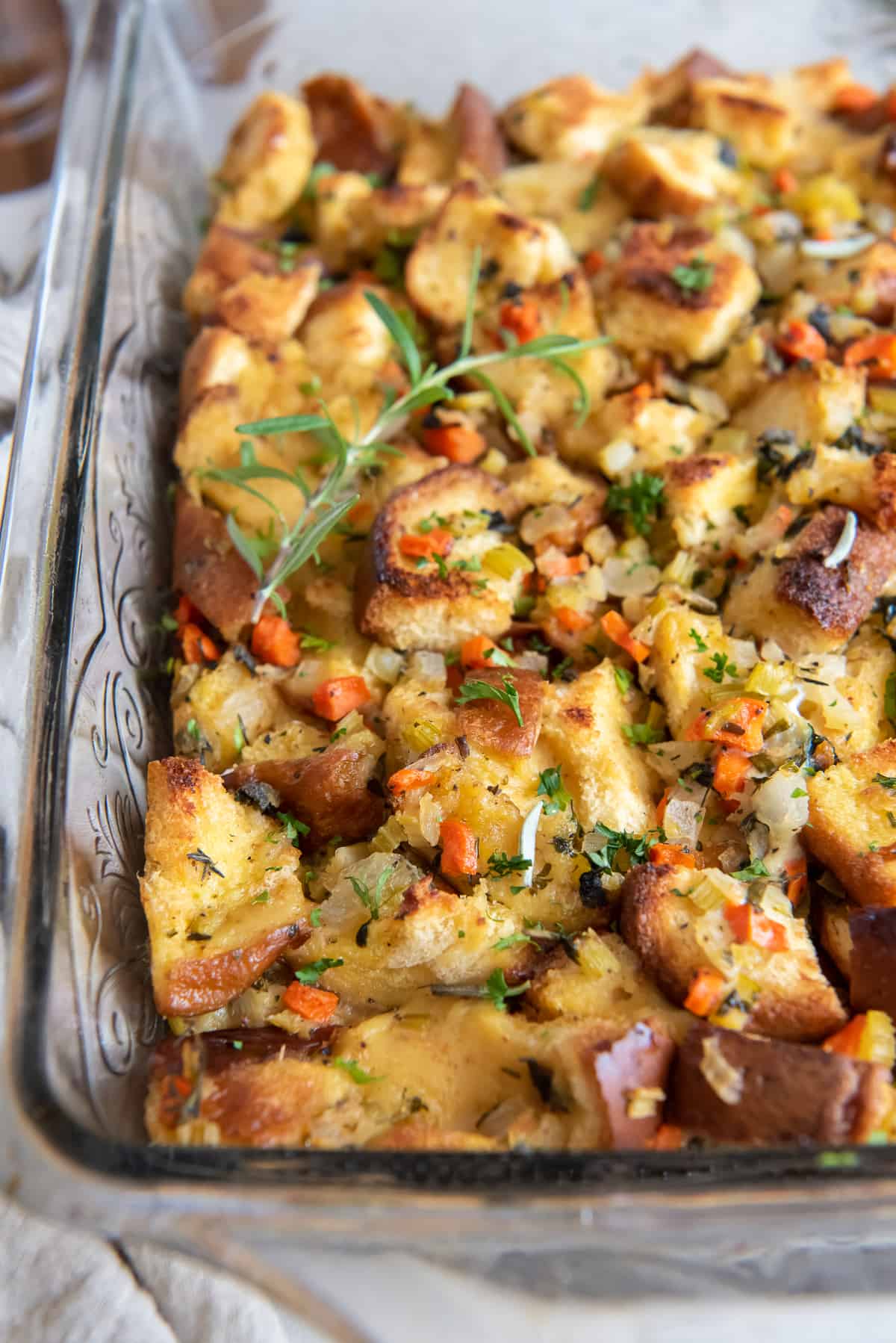
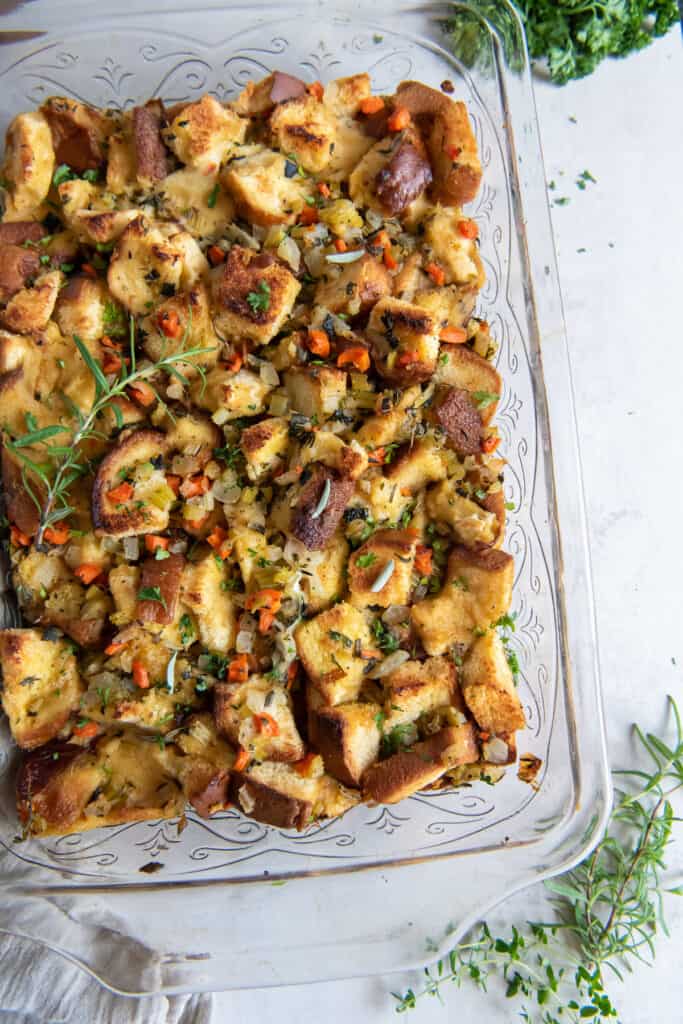
Fresh herbs accent the buttery flavor of brioche to create this Brioche Stuffing. This unique stuffing is an elegant upgrade for your Thanksgiving menu!
This Brioche Stuffing recipe and my Brioche French Toast are my favorite ways to make use of this rich and tender bread.
This post may contain affiliate links. Please read our disclosure policy.
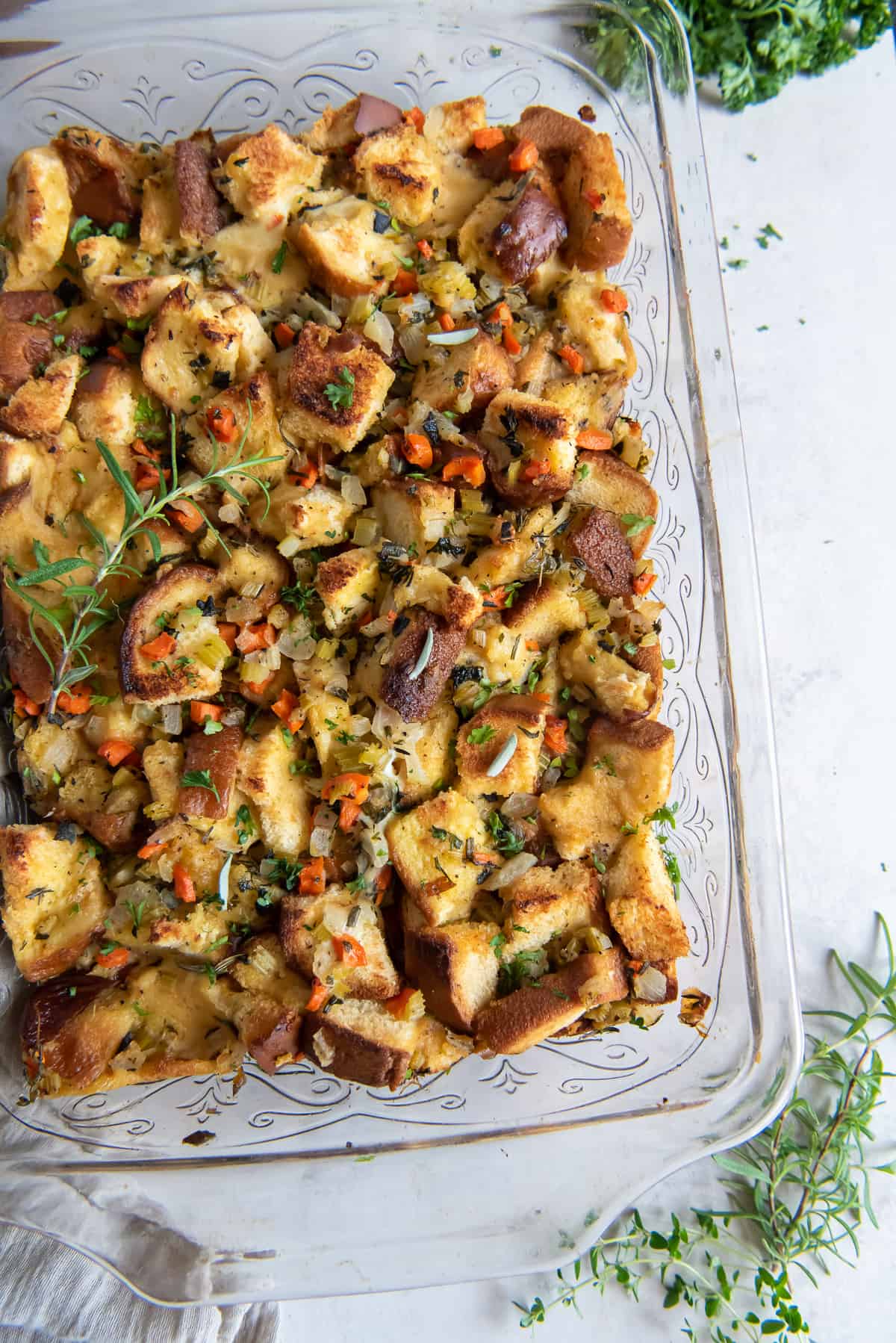
Now that sliced brioche has been making its way to store shelves everywhere, I decided it was time to try it in this stuffing recipe. And, I’m so glad that I did! It makes an absolutely delicious and downright gorgeous bread stuffing.
Slightly sweet, eggy and buttery brioche adds a uniquely delicious flavor to this stuffing. It’s toasted and baked with tender onion, carrot, and celery and plenty of fresh herbs.
This recipe gives me the best feeling – it evokes all things cozy. It’s both rustic and elegant at the same time and it’s truly special. And, this is coming from someone who takes her stuffing recipes VERY seriously.
Table of contents
Ingredient Notes
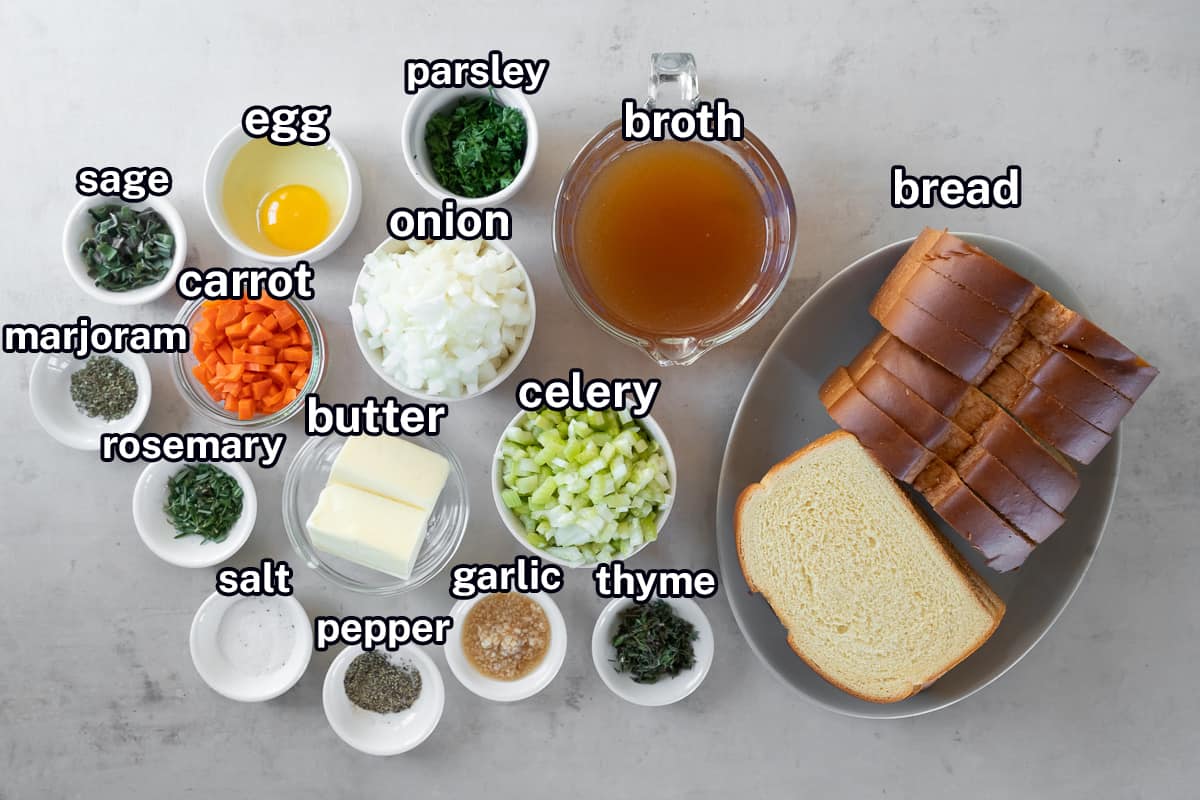
- Bread – I use a combination of sliced brioche and sliced buttermilk or potato bread (I use Oroweat). Both of these types of sandwich bread are available at most major grocery store chains. See below for more details on the ratio I like best.
- Butter
- Vegetables – Sweet yellow onion, celery, and a little carrot for color.
- Minced garlic
- Herbs – Italian parsley, rosemary, sage, thyme, and marjoram. With the exception of the marjoram, I like to use all fresh herbs for this stuffing. But you can mix and match – use up any fresh herbs you have in your kitchen and use dried herbs for the rest. You’ll find amounts for both in the recipe card below.
- Salt and freshly ground black pepper
- Egg – A beaten egg will help richen and bind the stuffing.
- Low-sodium broth – You can use chicken or turkey broth (whatever you happen to have on hand). Or, use vegetable broth for a vegetarian stuffing.
How to Make Brioche Stuffing
This is a quick overview of how to make this recipe. You’ll find detailed instructions in the recipe card at the end of this post.
Slice and Toast the Bread
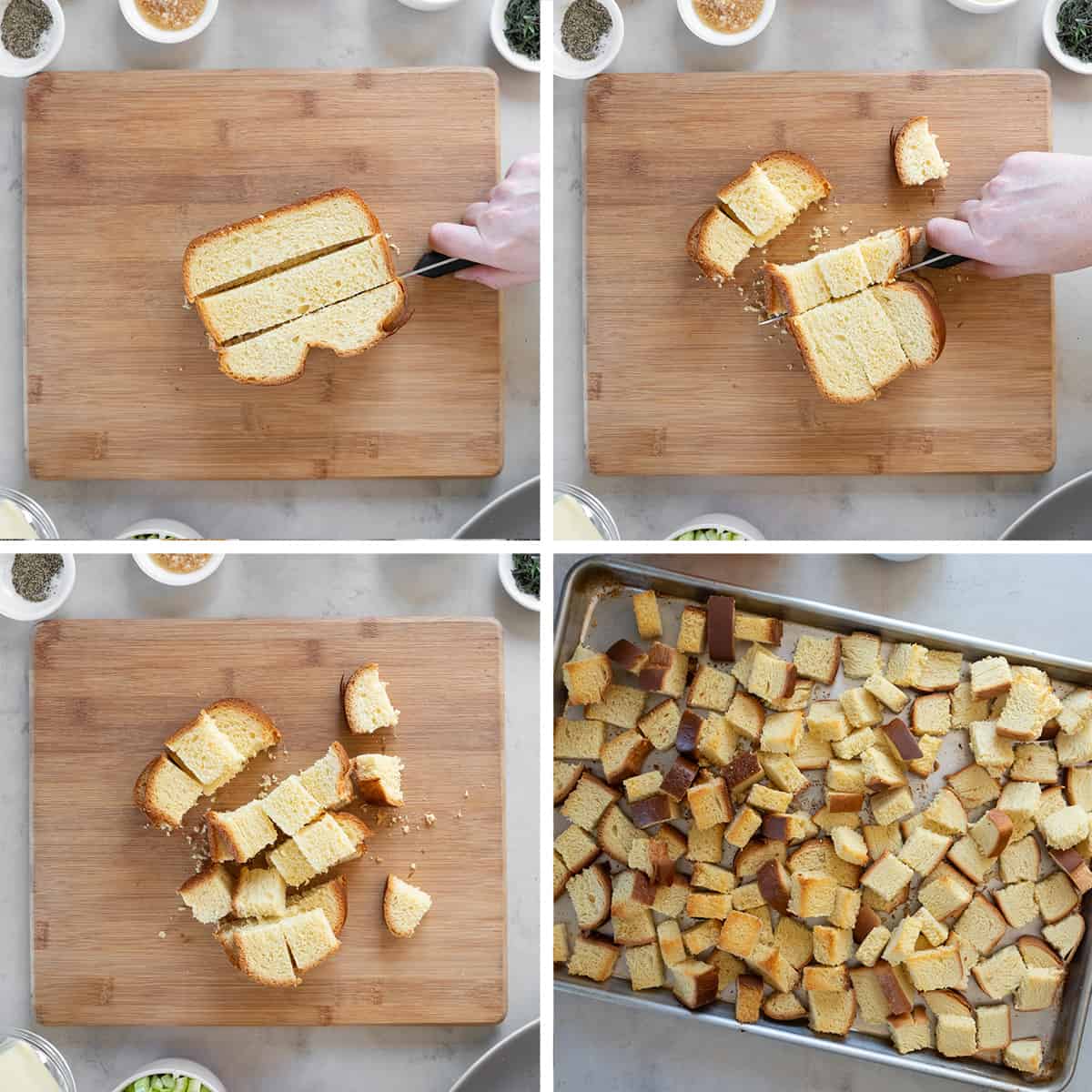
- Stack 2 or 3 slices of the bread on a cutting board and cut them into 1-inch thick slices.
- Cut the slices crosswise into 1-inch cubes.
- Repeat with remaining bread. You should have about 10 to 11 cups, give or take, of cubed bread.
- Spread the cubed bread on a rimmed baking sheet and bake for 12 minutes, or until golden brown and well toasted, tossing about halfway through the cooking time.
Sauté the Vegetables and Make the Stuffing
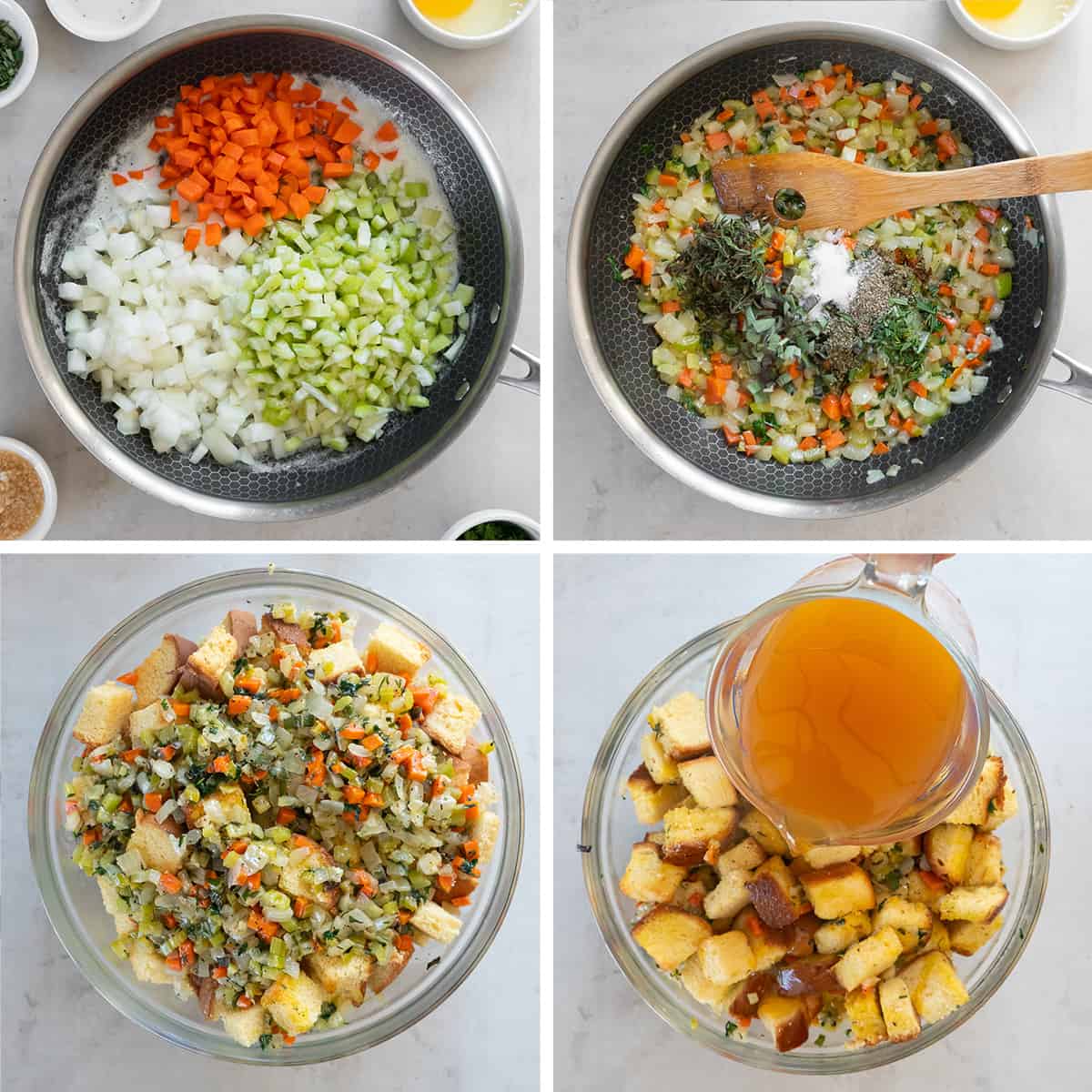
- While the bread is toasting, melt the butter in a large skillet. Add the onion, celery, and carrot. Cook over medium-high heat, stirring frequently, until tender. Add the garlic and parsley and cook and stir for another minute or two.
- Reduce the heat to medium-low and add the herbs, salt, and pepper. Mix well to combine then remove from the heat.
- Transfer the toasted bread to a large mixing bowl, spoon the cooked vegetables over the bread and mix well. Add the beaten egg and stir to combine.
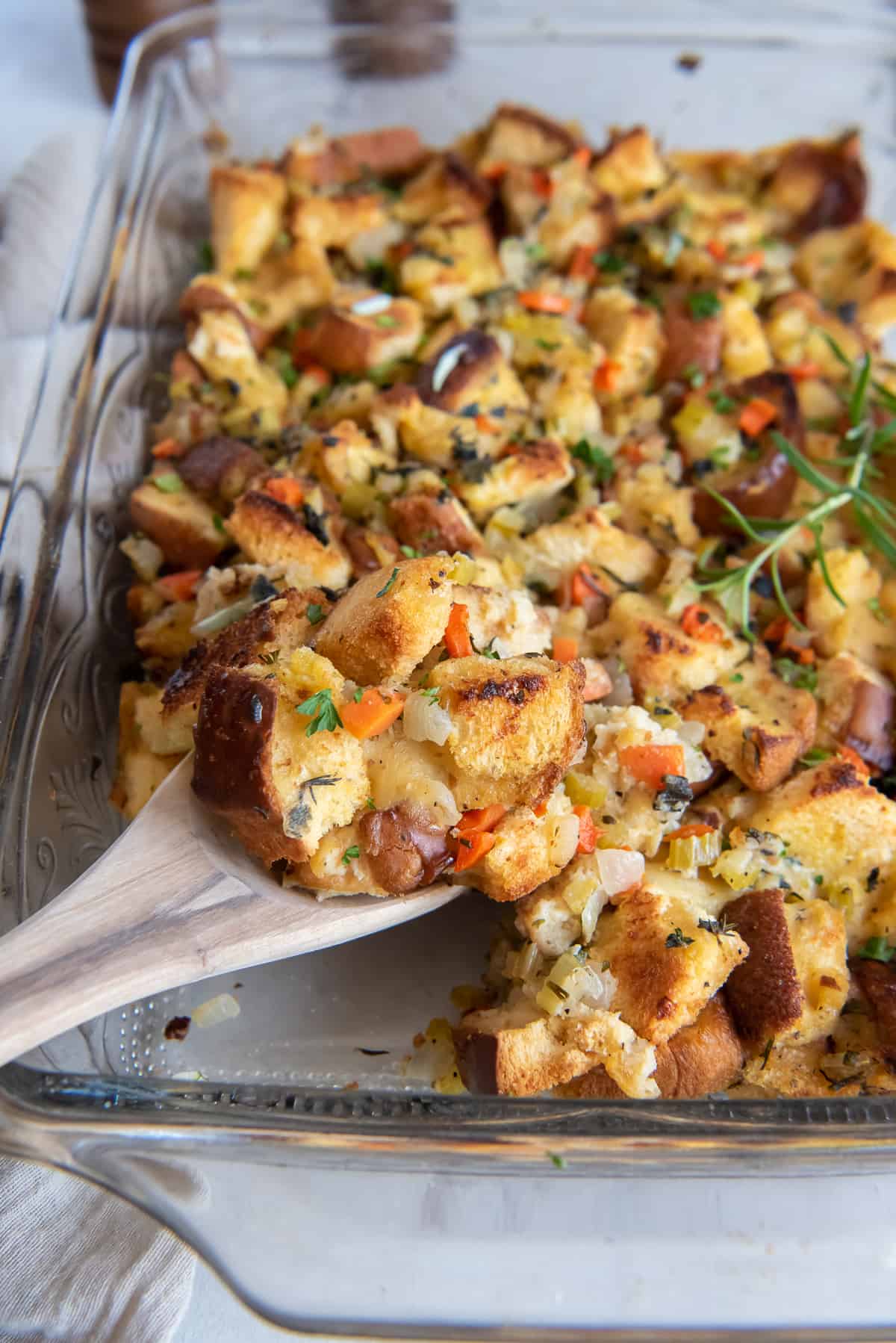
- Add about 1½ cups of broth and mix well. Add as much of the remaining broth as desired so that the stuffing is very moist but not super soggy. I used about 2 cups but it may be different for you.
Bake the Brioche Stuffing
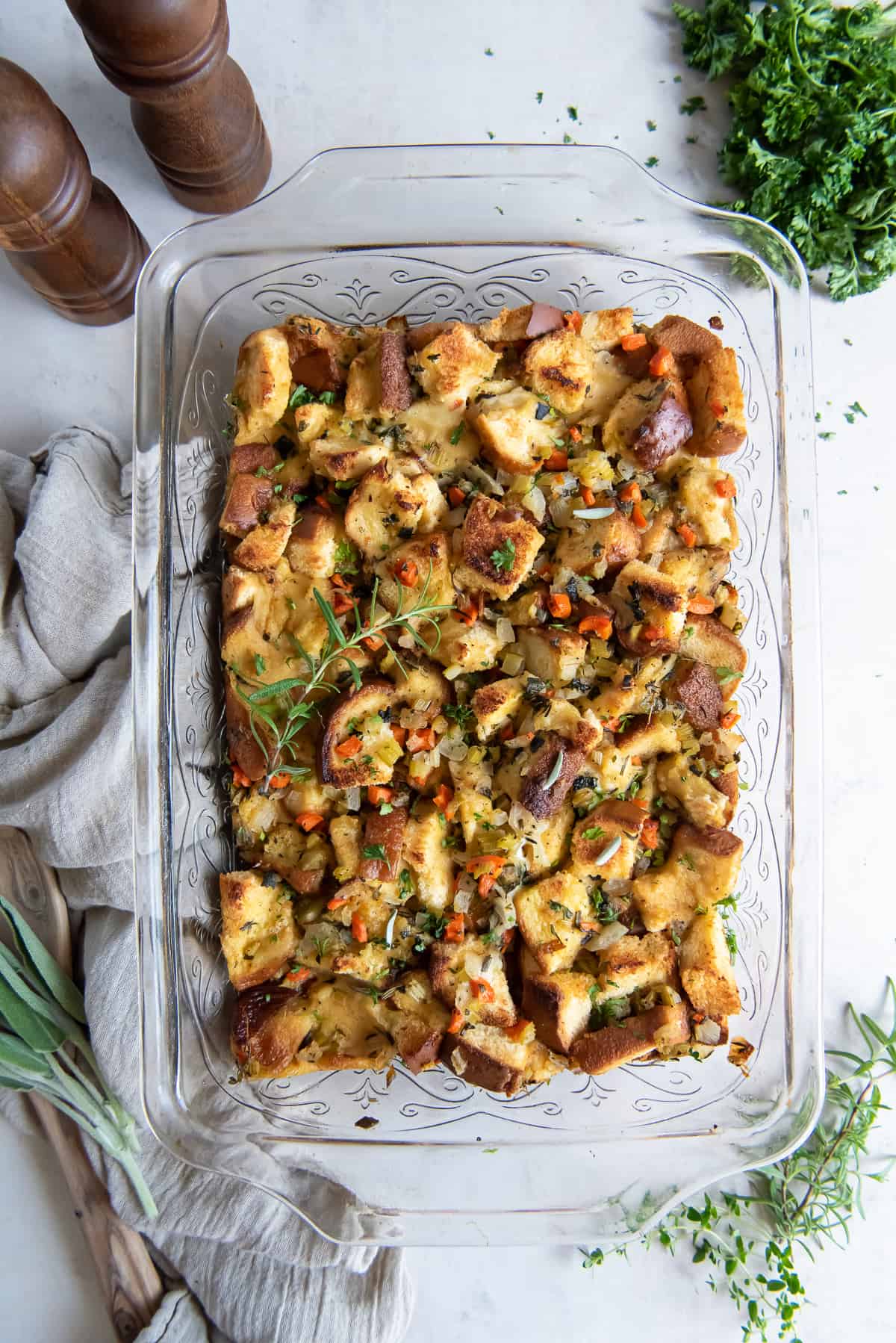
Coat a baking dish with nonstick cooking spray. You can use a 13- 9-inch baking dish or something a bit smaller, if you’d like. Transfer the stuffing to the dish, cover with aluminum foil, and bake for 35 to 40 minutes until warmed through. The internal temperature of the stuffing should be 165 degrees F. when measured with an instant read thermometer.
Pro Tip
For a crispy topping, remove the foil during the last 5 to 10 minutes of the baking time, or place under the broiler for a couple of minutes before serving.
Make-Ahead Tips
Once the wet and dry ingredients have been combined, the stuffing should be baked immediately for food safety concerns. But, you can still get some of the prep done in advance.
- Toast the bread pieces, allow them to cool, and then transfer them to plastic storage bags or other airtight containers for up to 24 hours.
- Dice the onion, celery, and carrot and store them in an airtight container in the refrigerator for up to two days.
Brioche Stuffing FAQ
It’s best to use a combination of different types of bread for a nice balance of flavor and texture. The one common ingredient in all of my stuffing recipes is sliced sandwich bread, specifically buttermilk or potato bread. It’s combined with French bread for my Crock-Pot Stuffing, with boxed cornbread mix for my Cornbread Stuffing with Sausage and Apples, and brioche in this recipe. You can use almost any variety of bread to make stuffing depending on what flavor profile you like best.
Brioche is a bread of French origin that has a higher ratio of eggs and butter than most other breads. This results in a rich, tender bread that has a pretty golden hue when toasted. Brioche has gained popularity in the U.S. over the past decade and is readily available in a variety forms at most stores now.
Brioche is richer and slightly sweeter than regular white bread. This is why I like to use a combination of brioche and either buttermilk or potato sandwich bread for the perfect flavor balance. The amount of brioche can be increased or decreased to suit your taste, but I recommend making this recipe as written the first time. As written, the stuffing is not overly sweet but the wonderful texture and flavor of brioche is there.
Cutting bread into cubes is faster and results in stuffing with a more uniform look. For a rustic result, you can tear some or all of the bread into pieces. Either is fine and just depends on your preference. For this Brioche Stuffing and my Homemade Stovetop Stuffing, I like the look of evenly sliced bread cubes. Many times I will tear some of the bread for my Crock-Pot Stuffing. Check those posts out to see the difference.
More Thanksgiving Side Dish Recipes
- Classic Scalloped Potatoes
- Maple Glazed Sweet Potatoes
- Roasted Delicata Squash Salad
- Wild Rice Pilaf with Cranberries and Pecans
- Sweet Potato Rolls
- Honey Roasted Carrots and Brussels Sprouts
- Orange Cranberry Sauce
Check out my entire collection of Thanksgiving recipes to complete your feast.
Sign up for my free newsletter for all the latest recipes and join me on Facebook, Instagram and Pinterest for more cooking inspiration!
Brioche Stuffing
Ingredients
- ½ pound sliced brioche bread, about 6 slices
- ½ pound sliced potato or buttermilk bread, about 6 slices (like Oroweat brand)
- ½ cup butter
- 1 ½ cups diced sweet yellow onion
- 1 ½ cups diced celery
- ½ cup diced carrot
- 2 teaspoons minced garlic
- ¼ cup chopped fresh Italian parsley
- 1 tablespoon fresh chopped rosemary, or 1 teaspoon dried crushed rosemary
- 1 tablespoon fresh chopped sage, or 1 teaspoon dried rubbed sage
- 2 teaspoons fresh thyme leaves, or ½ teaspoon dried thyme
- ½ teaspoon dried marjoram
- 1 teaspoon salt
- freshly ground black pepper, to taste
- 1 egg, lightly beaten
- 1 ¾ to 2 cups low-sodium chicken or vegetable broth, divided
Instructions
- Preheat oven to 375 degrees F.
- Stack 2 or 3 slices of the bread on a cutting board and cut them into 1-inch thick slices. Cut the slices crosswise into 1-inch cubes. Repeat with remaining bread. You should have about 10 to 11 cups of bread cubes.
- Spread the cubed bread on a rimmed baking sheet and bake for 12 minutes, or until golden brown and well toasted, tossing about halfway through the cooking time.
- While the bread is toasting (but keep your eye on it), melt the butter in a large skillet. Add the onion, celery, and carrot. Turn the heat up to MEDIUM-HIGH and cook, stirring frequently, for about 8 to 10 minutes, or until tender. If the butter or veggies begin to brown, reduce the heat under the skillet a little. Add the garlic and parsley and cook and stir for another minute or two. Reduce heat to MEDIUM-LOW and add the rosemary, sage, thyme, marjoram, salt and pepper. Mix well to combine then remove from the heat.
- Remove the bread from the oven and reduce the oven temperature to 350 degrees F. Coat a 13- x 9-inch baking dish (or slightly smaller dish) with nonstick cooking spray.
- Transfer the toasted bread to a large mixing bowl, spoon the cooked vegetables over the bread and mix well. Add the beaten egg and stir to combine. Add 1½ cups of broth and mix well. Add as much of the remaining broth as desired so that the stuffing is very moist but not super soggy (I used very close to 2 cups total).
- Transfer the stuffing to the prepared baking dish. Cover the dish with foil and bake, covered, for 35 to 40 minutes until warmed through or until the internal temperature reaches 165 degrees F. For a crispy topping, remove the foil during the last 5 to 10 minutes of the baking time, or place under the broiler for a couple of minutes before serving.
- Remove cover and fluff the stuffing with a spoon and serve.
Notes
- Toast the bread pieces, allow them to cool, and then transfer them to plastic storage bags or other airtight containers for up to 24 hours.
- Dice the onion, celery, and carrot and store them in an airtight container in the refrigerator for up to two days.
Nutrition
Nutrition information is automatically calculated using generic ingredients, and is an estimate not a guarantee. For more accurate results, please refer to the labels on your ingredients at home.
Like this? Please rate & comment below!