
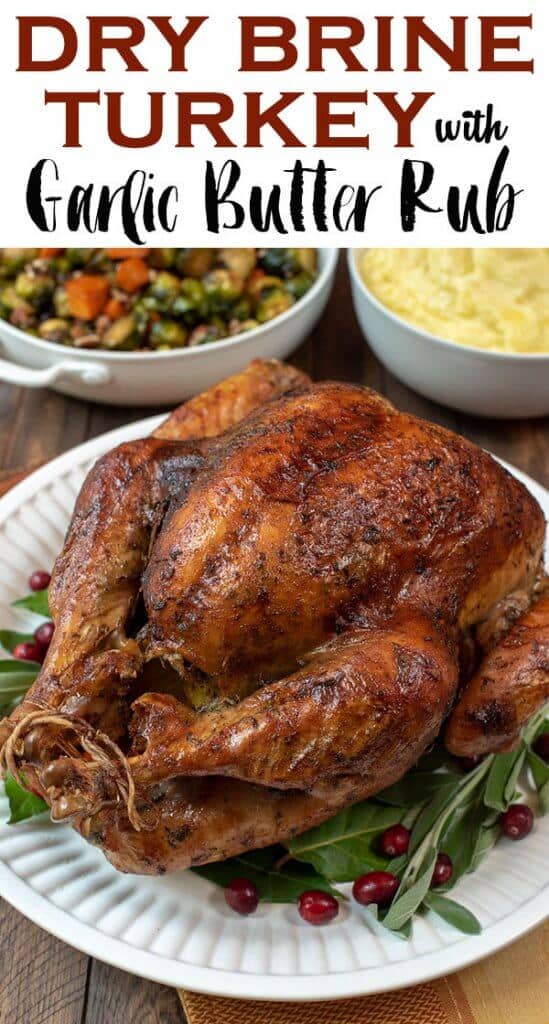
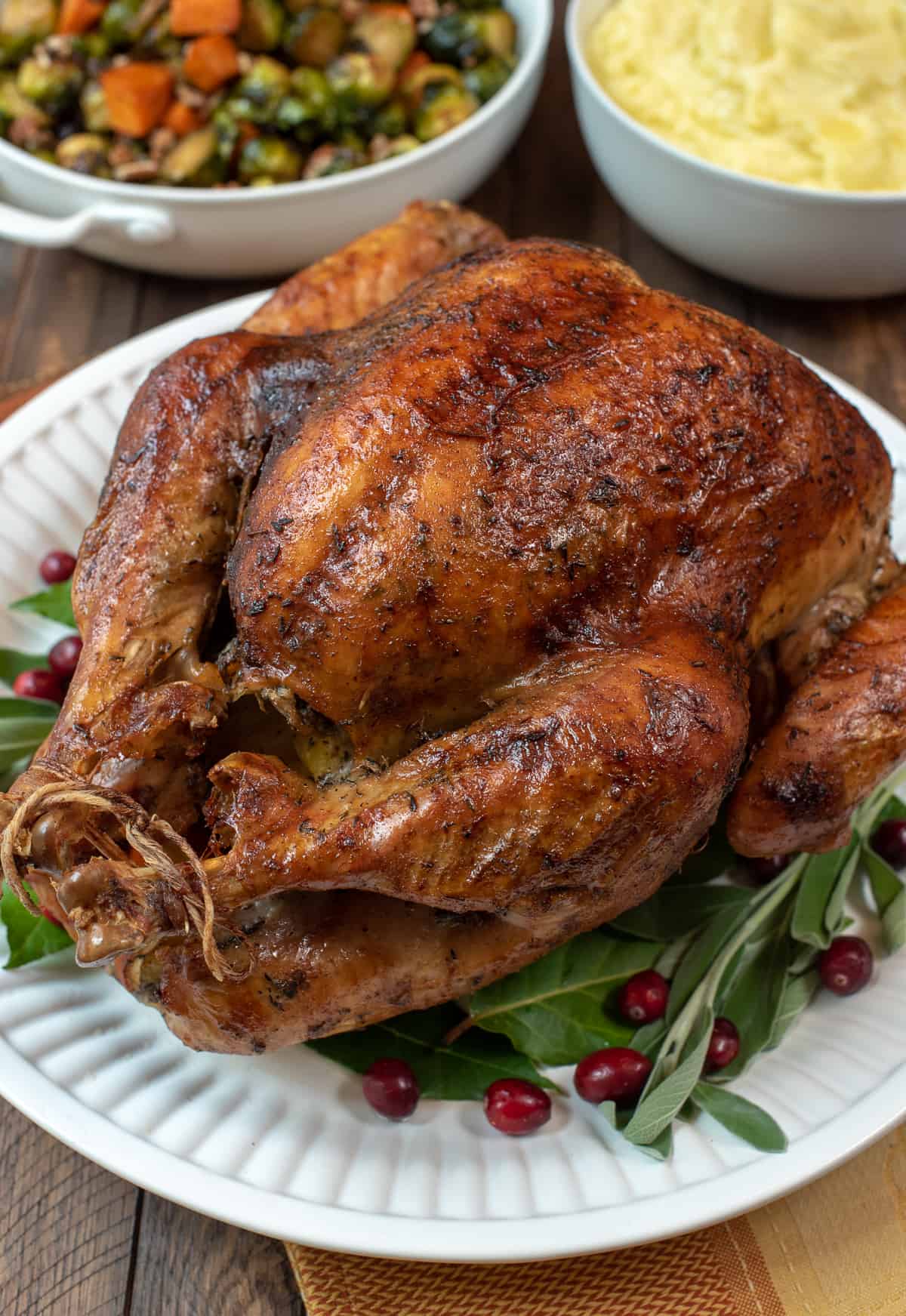
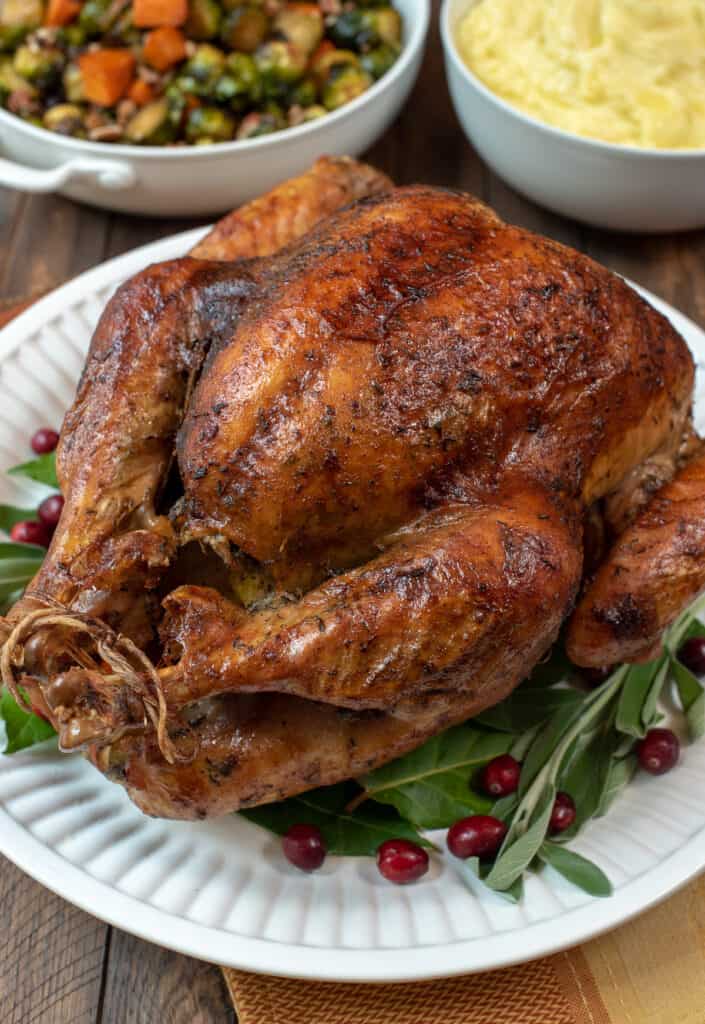
This Dry Brine Turkey recipe creates an incredibly tender, juicy turkey with beautifully browned, crispy skin. Dry brining is an easy method that transforms your turkey into a gorgeous, flavorful centerpiece for your holiday table.
This post may contain affiliate links. Please read our disclosure policy.
I’ve been roasting turkeys pretty much the same way for most of my life, but I was completely blown away by this dry brine method. The flavor, the tenderness, and that perfectly crisp skin make it a total game changer. This recipe has become an annual tradition in my kitchen.
I love make-ahead recipes for my holiday menus, and one of the best things about this one is that you can get all the messy turkey prep out of the way days before Thanksgiving.
Table of contents
What is Dry Brining?
Dry brining is the process of applying a dry rub consisting of coarse salt and seasonings to a cut of meat, in this case a whole turkey, and then allowing it to rest in the refrigerator for two or three days.
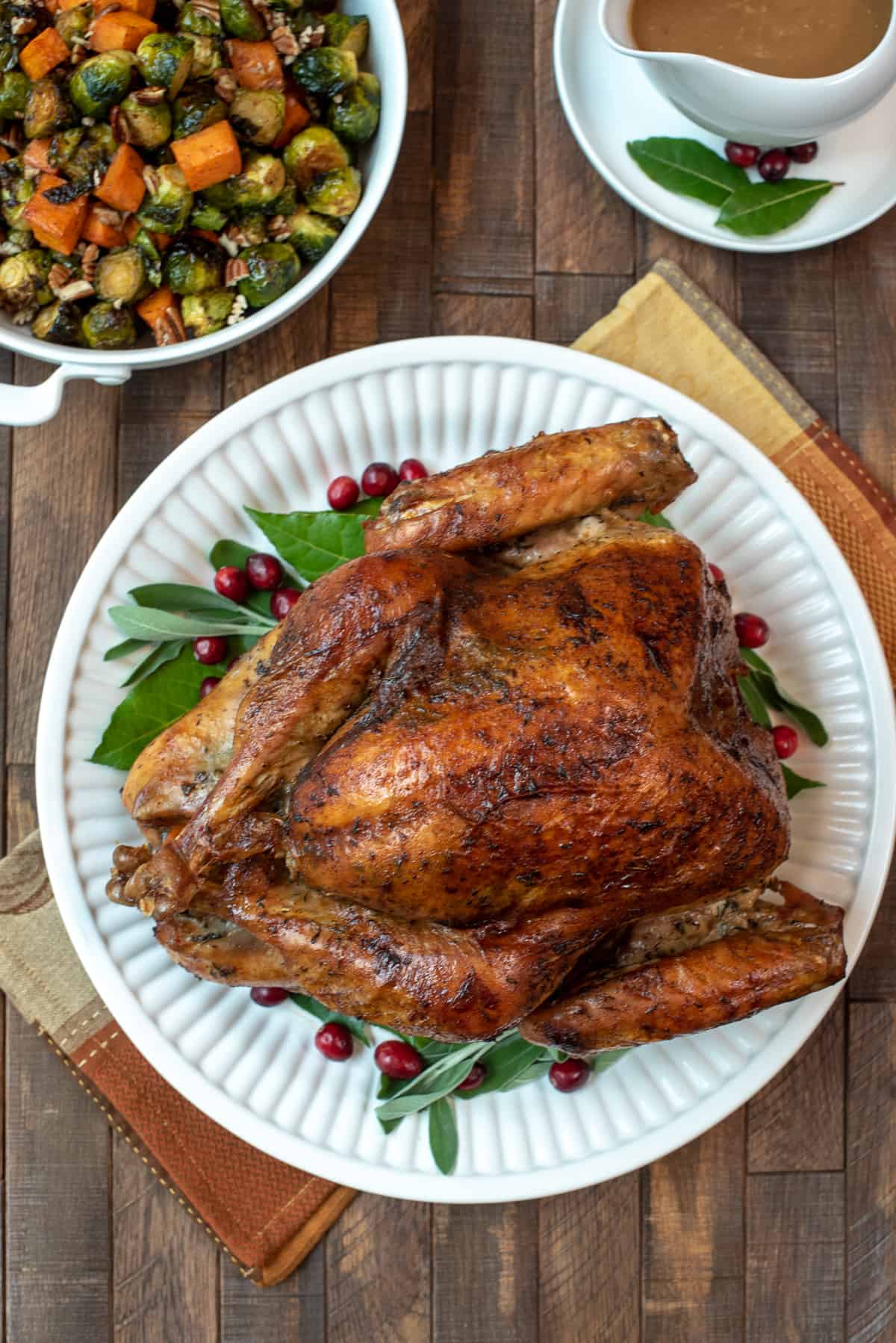
The salt works to draw out the turkey’s juices and then the salt dissolves in the juices. It’s all reabsorbed back into the turkey to help break down the tough muscle proteins. A little scientific but a lot AMAZING. The result is a bird that is succulent, juicy, tender, and flavorful. Resting uncovered for at the last part of the chilling time dries out the skin a bit, resulting in that beautifully browned, crispy skin you see in the images in this post.
The dry brine method is SO much cleaner and easier than a wet brine and I believe the result is at least as good if not better. Plus, it eliminates the need to hunt down a container large enough to accommodate gallons of water and a big turkey. Not to mention the refrigerator space.
Prep-Ahead
You can start the dry brine process up to 3 days in advance of Thanksgiving and when the big day arrives, your turkey will require only a minimal amount of remaining prep before you pop it in the oven to roast.
Ingredient Notes
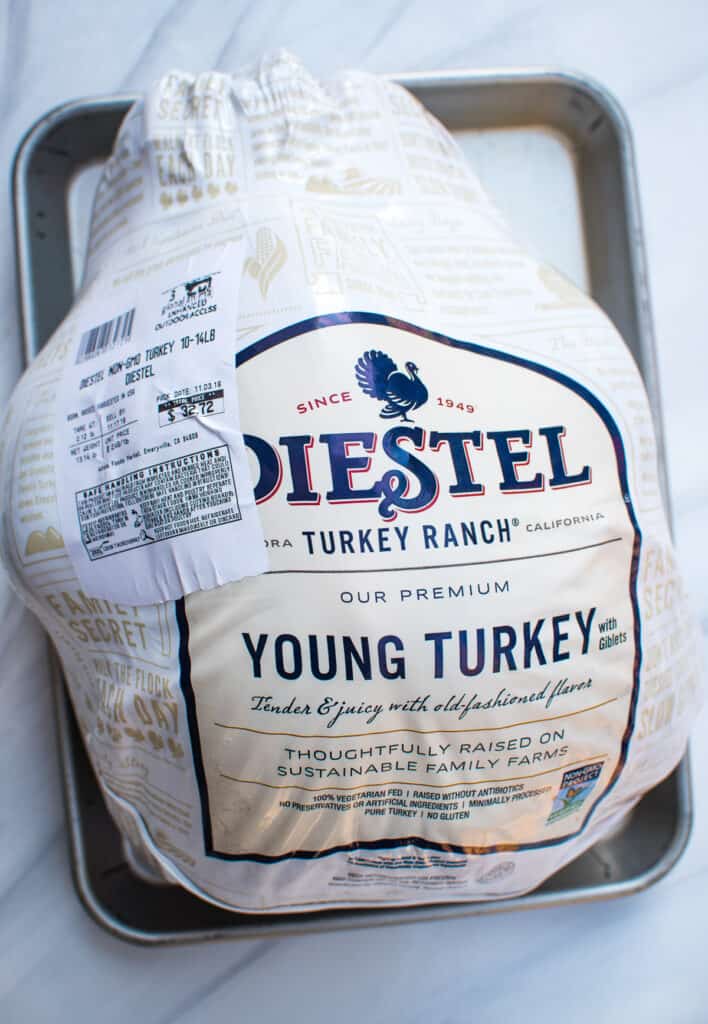
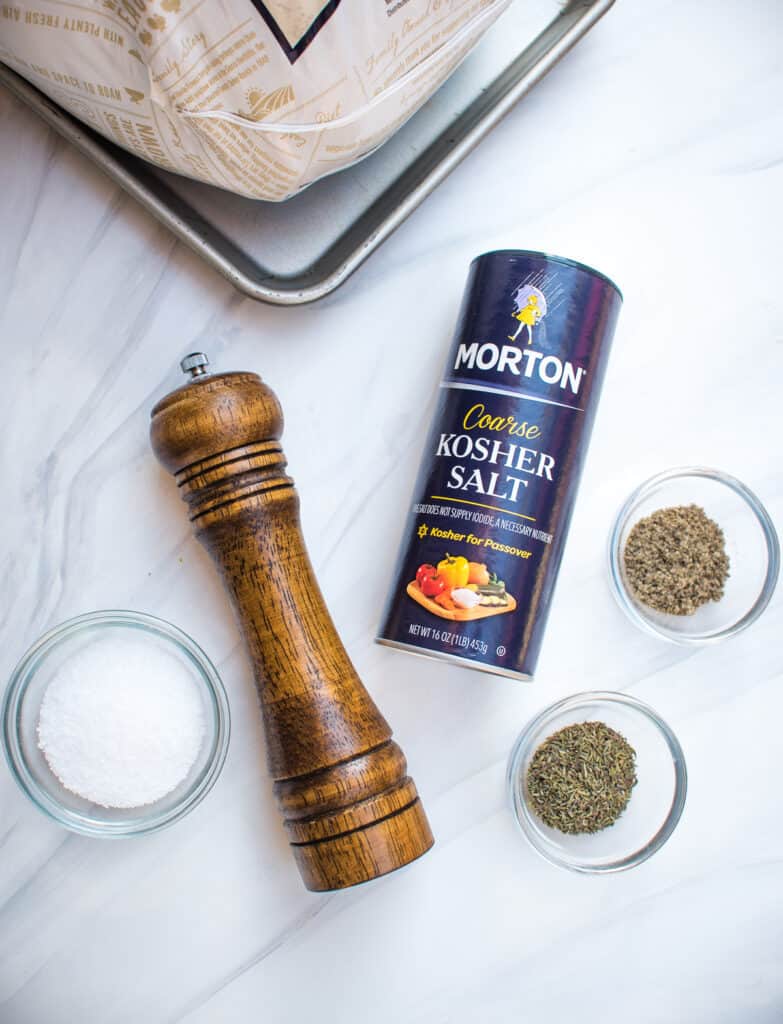
- Turkey: Choose a 12- to 16-pound natural, minimally processed turkey. Either fresh or frozen works fine, but it’s important that the bird has not been injected with a salt solution. Avoid brands like Butterball or any Kosher turkeys that have already been pre-salted, since they can become too salty once brined. Check the label and avoid any that list salt as an ingredient. I picked up my 13-pound turkey from Whole Foods. They had the best selection of minimally processed turkeys in my area.
- Low-sodium chicken or turkey broth: Used to add moisture to the roasting pan and infuse the drippings with flavor. Stick with low-sodium so you can control the salt content.
- Coarse kosher salt and freshly ground black pepper: The most crucial component of any dry brine. Its larger crystals draw moisture from the turkey, which then gets reabsorbed to season the meat throughout.
- Dried thyme and dried rubbed sage: These herbs infuse the turkey with subtle savory flavor as it rests under the brine.
- Softened butter and olive oil: Combined with garlic, it adds richness and helps the skin brown and crisp beautifully as the turkey roasts.
- Granulated garlic or garlic powder: Blended into the butter mixture for an extra layer of buttery garlic flavor.
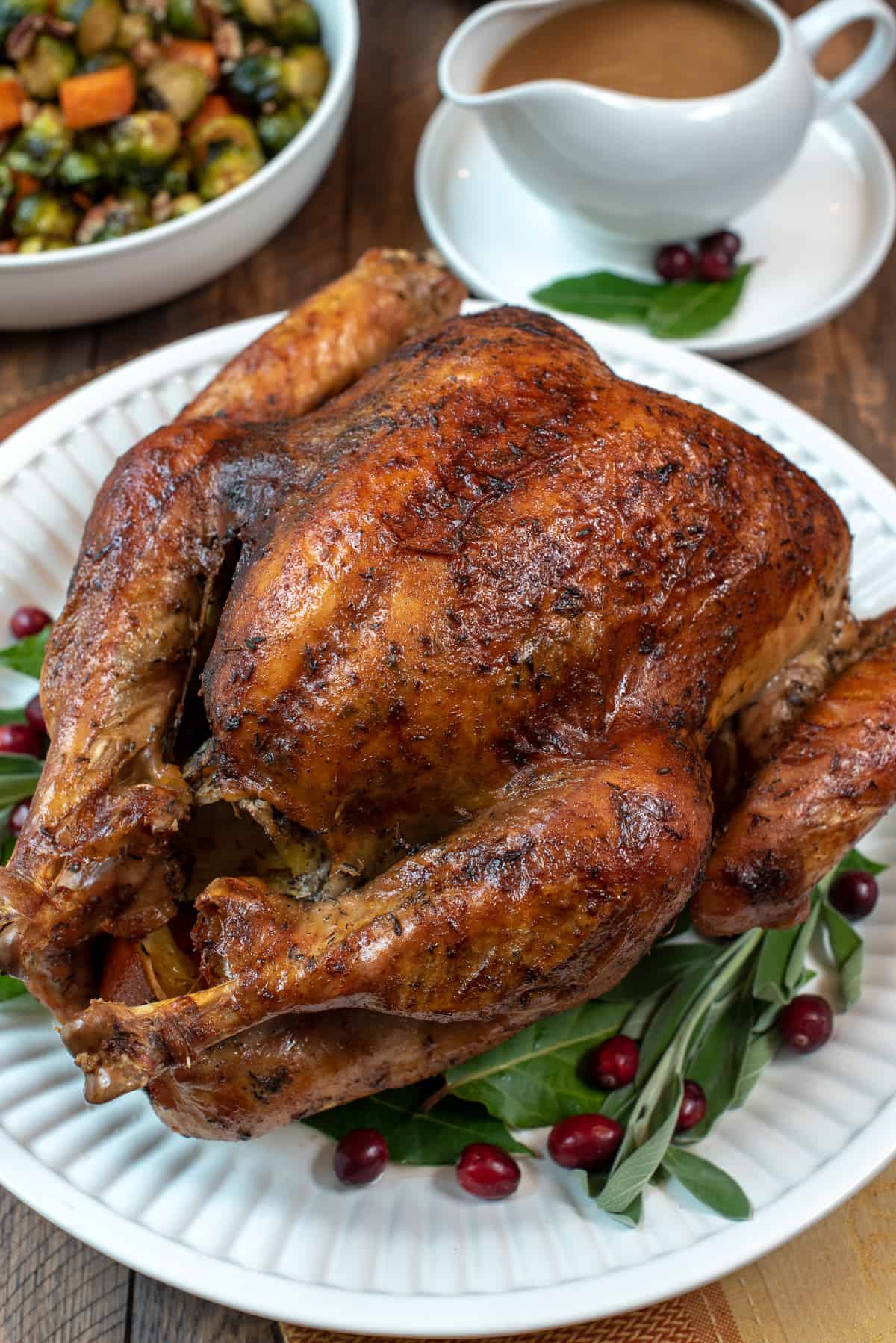
- Aromatics: Add any variety of you’d like to the cavity of the turkey before roasting. I went with onion, carrot, and a quartered orange. Lemon, fresh herbs, and celery are also wonderful options. The aromatics add wonderful flavor to the drippings, especially important if you plan to make gravy.
How to Safely Thaw Turkey Before Brining
It takes approximately 1 day (24 hours) per 4 pounds to thaw in the refrigerator, so, for instance, if you have a 16 pound turkey, it will take 4 full days to thaw completely. Place it on a rimmed baking sheet before placing it in your fridge in case any juices escape the packaging while thawing. You can get more safe thawing tips on the USDA website.
Approximate Turkey Thawing Times
- 4 to 12 pounds — 1 to 3 days
- 12 to 16 pounds — 3 to 4 days
- 16 to 20 pounds — 4 to 5 days
- 20 to 24 pounds — 5 to 6 days


How to Dry Brine a Turkey
- Prep the turkey.
Two to three days before roasting, remove the completely thawed turkey from its packaging and take out the giblets. Don’t rinse it with water — it’s not recommended for food safety reasons. Pat the cavity and exterior dry with paper towels. I like to work on a foil-lined board for easy cleanup. - Mix and apply the brine.
In a small bowl, combine the dry brine ingredients. Sprinkle a little inside the cavity, then gently lift the skin covering the breast and rub some directly onto the meat underneath. Coat the outside of the turkey with the rest of the mixture. - Refrigerate, covered.
Place the turkey on a rack in a roasting pan or large rimmed baking sheet and cover it tightly with plastic wrap. Refrigerate for one to two days (two is best for larger birds). - Air-dry before roasting.
Remove the plastic wrap and refrigerate the turkey uncovered for at least 8 hours, or up to 24. This helps the skin dry out so it roasts up gorgeously golden and crisp.
Set a Reminder
If you are like me, you’ll need to set a reminder on your phone to remove the plastic wrap. I am seriously overloaded the day before Thanksgiving so my brain is not exactly running on all cylinders!
How to Roast a Dry Brined Turkey
- Let the turkey come to room temperature.
When the big day arrives, remove the turkey from the refrigerator and let it rest on your counter for 45 minutes to 1 hour before roasting. This takes the chill off so it cooks evenly. - Don’t rinse!
Seriously, don’t do it! Rinsing will undo all the drying magic that creates that beautifully crisp skin. The salt has already been absorbed and done its job. Your turkey won’t taste salty, it’ll just be seasoned perfectly throughout. - Add aromatics.
Before roasting, fill the cavity with the aromatics (onion, carrot, and orange) to add flavor to the meat and drippings. - Apply the garlic butter rub.
In a small bowl, mix softened butter, olive oil, and granulated garlic. Gently lift the skin covering the breast meat and spread some of the mixture underneath, then slather the rest all over the outside of the turkey. This step helps the skin brown beautifully and adds rich, buttery flavor. - Add broth and roast.
Pour about 2 cups of low-sodium chicken or turkey broth into the bottom of your roasting pan. Brined turkeys release less liquid as they cook — that’s a good thing, because it means the juices stay in the meat. Roast the turkey at 325°F for about 12 to 15 minutes per pound, or until the internal temperature reaches 165°F when measured in the thickest part of the thigh. Keep an eye on it toward the end — brined turkeys can cook a little faster than expected. - Baste often.
Baste the turkey several times as it roasts to encourage even browning and crisp, golden skin. Add more broth as needed — I usually go through an entire 32-ounce carton of chicken broth. - Rest before carving.
Once it’s done, tent the roasting pan loosely with foil and let the turkey rest for 30 minutes before carving. This gives the juices time to redistribute so every slice is moist and flavorful.
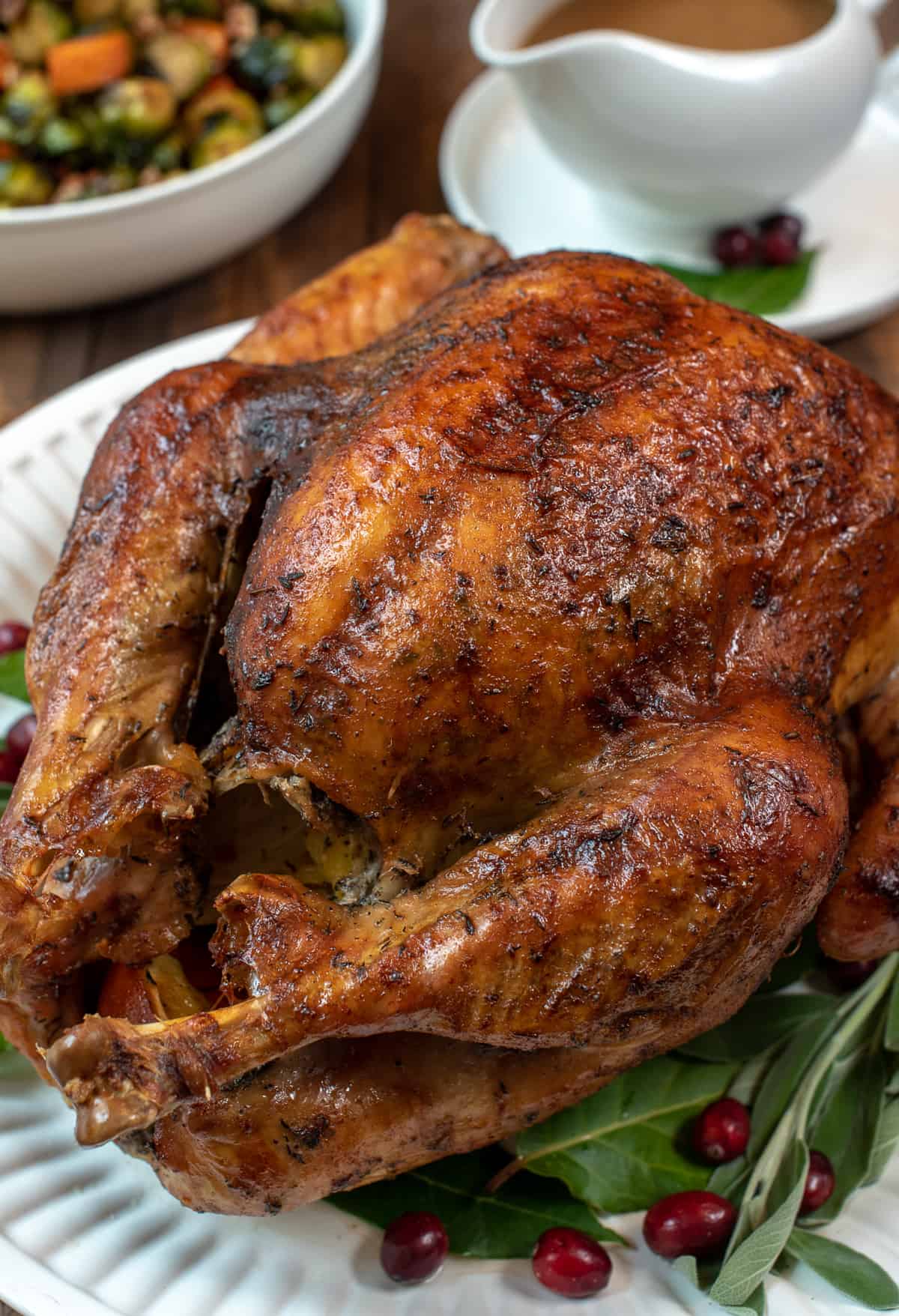
Serving and Storing
Once your turkey has rested, carve it and serve it alongside classic Thanksgiving favorites. You’ll find detailed carving instructions with step-by-step photos in my Herb Roasted Turkey post.
This Dry Brine Turkey pairs perfectly with my
- Easy Turkey Gravy
- Make-Ahead Mashed Potatoes
- and the most delicious Crock Pot Stuffing ever!
For more menu inspiration, browse my full collection of Thanksgiving recipes to round out your feast.
Leftover turkey can be refrigerated for up to 4 days or frozen for up to 3 months. Store carved meat in an airtight container with a little broth drizzled over the top to help keep it moist when reheated.
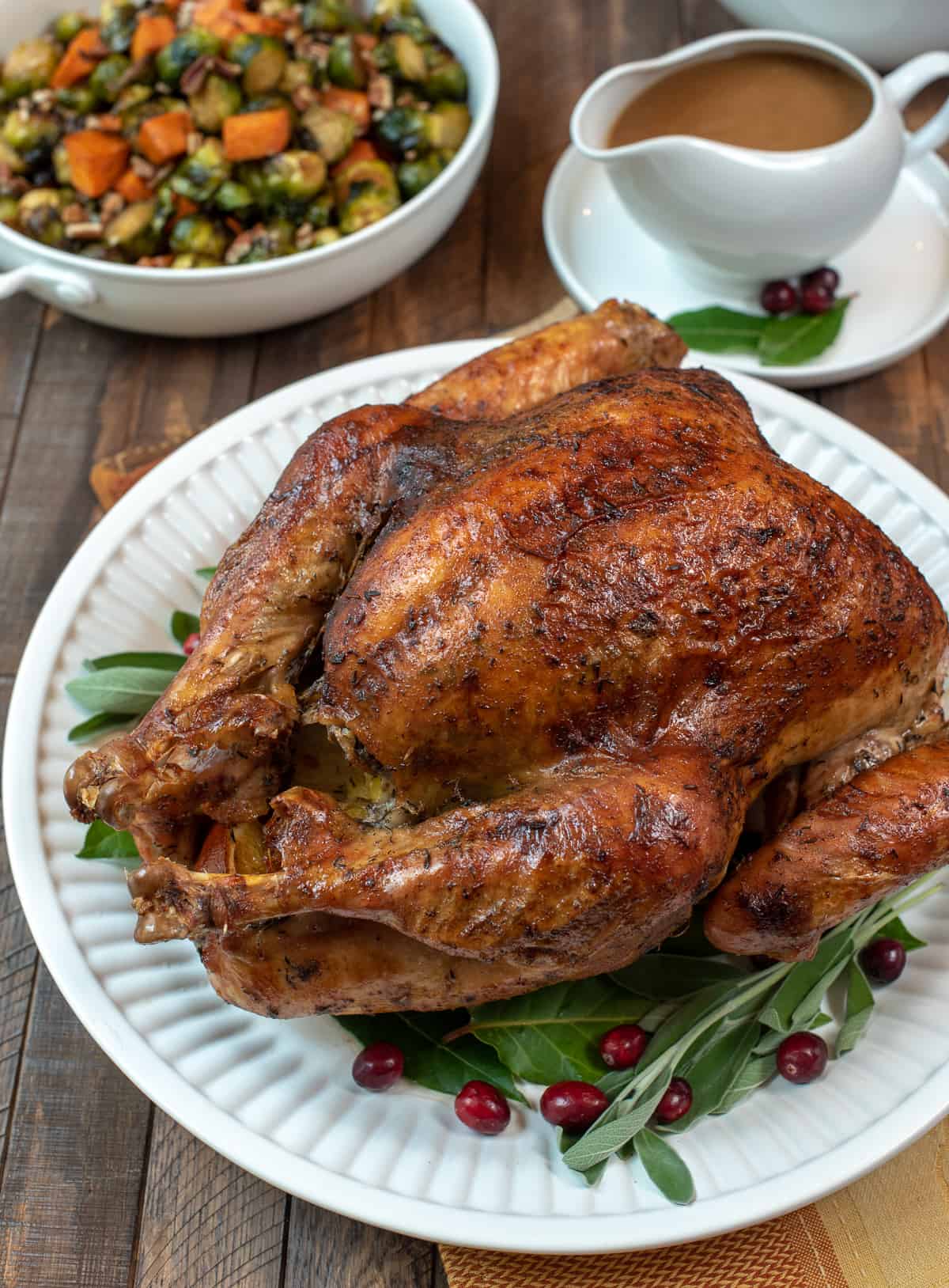
More Thanksgiving Turkey Recipes
If you don’t have time to brine this year take a gander at my detailed instructions for my Herb Roasted Turkey. It has a more traditional method of preparation that works wonderfully with the beloved Butterball Turkey.
Serving a small group? My Roasted Turkey Breast with Gravy is the perfect choice!
For more general turkey info, check out my post on How To Choose, Prep, and Roast your Turkey.
I wish you all a festive Thanksgiving and a fabulous feast. I’d love to hear what you’re making so feel free to comment or drop me a line. Happy cooking and Happy Thanksgiving!
Sign up for my free newsletter for all the latest recipes and join me on Facebook, Instagram and Pinterest for more cooking inspiration!
Dry Brine Turkey
Equipment
Ingredients
- 12 to 16 pound natural turkey, safely thawed
- 32 ounces low-sodium chicken or turkey broth
- kitchen twine, for tying legs together
Dry Brine (per 5 pounds of turkey weight)
- 1 tablespoon coarse ground kosher salt, (per 5 pounds of turkey)
- 1 teaspoon dried thyme, (per 5 pounds of turkey)
- 1 teaspoon dried rubbed sage, (per 5 pounds of turkey)
- ½ teaspoon freshly ground black pepper , (per 5 pounds of turkey)
Garlic Butter Rub
- ½ cup butter, softened
- 2 tablespoons olive oil
- 1 tablespoon granulated garlic or garlic powder
Aromatics
- 1 carrot, scrubbed clean and cut into chunks
- 1 small onion, peeled and cut into chunks
- 1 small unpeeled orange, sliced into wedges
Instructions
Brine the Turkey
- Remove the packaging (in or next to sink) and remove the giblets. Transfer the turkey to a large sheet of heavy duty foil for easy cleanup. Pat the cavity and exterior of the turkey dry with paper towels.
- Combine the Dry Brine ingredients in a small bowl. Sprinkle a few teaspoons of the dry brine inside the cavity and use your hand to spread it around. Gently lift skin on breast portion and carefully reach inside and coat as much of the breast meat as possible with a couple of teaspoons of the brine. Sprinkle the remaining brine all over the outside of the turkey.
- Transfer the seasoned turkey to a rack in your roasting pan (or a rimmed baking sheet). Cover it securely with plastic wrap – I used 5 or 6 sheets to cover my big roasting pan. Transfer the turkey to the refrigerator and forget about it for 24 to 48 hours.
- Remove the plastic wrap and let the bird sit uncovered in the refrigerator for an additional 8 to 24 hours.
- Remove the turkey from the refrigerator about an hour before you are ready to roast it. Stand the turkey up to pour out and discard any liquid that might have collected in the cavity and pour off or blot up any juices that have collected in the pan. Place the turkey back on the roasting rack. If you chilled your turkey on a baking sheet, transfer it to a rack in a roasting pan now.
Roast the Turkey
- Preheat oven to 325 °F. Combine the butter, olive oil, and granulated garlic in a small mixing bowl. Set aside.
- Stuff the turkey cavity with the carrot, onion, and orange.
- Scoop up some of the garlic butter mixture with your hand and spread it under the skin of both turkey breasts. Spread the remaining butter mixture over the outside of the turkey, being sure to get into all the nooks and crevices of the wings and legs. Tuck wings securely under the body and use kitchen twine to tie the legs together. Pour about 2 cups of broth into the bottom of the roasting pan.
- Transfer the roasting pan to the preheated oven. Allow the turkey to roast for about 45 minutes and then baste it once every 20 to 30 minutes or so throughout the remainder of the roasting time, adding additional broth if it begins to evaporate from bottom of pan. Rotate the pan in the oven about halfway through the cooking time to ensure even browning. Tent with foil once skin is browned to your liking.
- Roast until the internal temperature of the meatiest portion of the thigh registers a solid 165 °F. The roasting time should range from approximately 3 to 4½ hours if your turkey is between 12 to 16 pounds.
- Remove the turkey from oven, tent it loosely with foil, and allow it to rest for about 30 minutes before carving.
Notes
- 3 tablespoons coarse kosher salt
- 1 tablespoon dried thyme
- 1 tablespoon dried rubbed sage
- 1 ½ teaspoons freshly ground black pepper
Nutrition
Nutrition information is automatically calculated using generic ingredients, and is an estimate not a guarantee. For more accurate results, please refer to the labels on your ingredients at home.
Like this? Please rate & comment below!












Have used this receipt for 2 years. It is the best turkey I have ever had.
Can you still stuff the Turkey with the dry brine?
I always recommend cooking the stuffing outside the bird, however, I’ve heard that many people have stuffed their dry brined turkey with great success.
I have done this the last couple of years and loved it. I wanted to try spatchcocking this year. Do you see any issues with that?
There is no problem with it at all. Go ahead and cut the turkey and then brine it as directed. Hope it turns out great for you!
Thank you for confirming that! Do you see any issue if i leave it uncovered in the fridge the full 3 days instead of just uncovering it the night before? I am really looking forward to trying this awesome recipe but spatchcocking this year. Have you tried that before?
I wouldn’t change the timing on the dry brine. Also, dry brined turkeys roast a bit faster as do those that are spatchcocked so you’ll need to watch the temp closely.
We have spatckcocked our turkey with this brine. It is amazing
I made this last year for Thanksgiving and it was the best I’ve ever made, will be dry brining my turkey again this year!
I’m so glad it worked out well for you! It’s my favorite method too. Thanks, Kenneth. 🙂
Do you recommend Morton Course Kosher Salt instead of Diamond Crystal Kosher salt? I know their is a difference in crystal size.
Morton is more widely available here on the West coast so it’s what I’ve always used. I have read there is a difference in the size and shape of the crystals but I believe that difference would not be significant in a dry brine. You are just salting the exterior of the bird and a little more or less is not going to hurt at all. Hope this helps!
I just tried this recipe this weekend and I will echo everyone’s previous comments that this is an outstanding method for executing the perfect turkey! I only had 24 hours to dry brine our 14 pound turkey- but left the bird uncovered that entire time. set my oven to convection roast @ 325- followed Valerie’s instructions for basting- although I used a bottle of pinot grigio as well as stock. The turkey was done after only 2 hours. Covered the entire turkey in the pan with foil and let it rest for close to one hour- uncovered and carved up the most delicious bird. I am a “recovering vegetarian” so making something like a turkey has always been daunting…but thanks to Valerie- I have major confidence in my turkey roasting skils!
Tried dry brining for first time, mostly following this recipe. The turkey was best ever. Will make again with less garlic as it was a bit strong in the gravy for our taste. No other issues and loved the left overs for sandwiches. Awesome!
I had a 22 lb turkey and have been cooking turkeys for almost 40 yes. I pretty much followed recipe to a T except added rosemary and extra butter and garlic, and it was THE BEST turkey I ever cooked. So very flavourful and juicy. Even the white meat was decadent. My family and guest raved. It will be my new yearly tradition.
I used this recipe yesterday for our Thanksgiving turkey….I did use fresh herbs from my garden…….thyme, marjoram and sage, chopped fine, mixed with the kosher salt…..amazing! The best turkey I have ever cooked. I did have to roast a little longer, but that could be a problem with my oven, so next time I will probably turn bird with breast side down for the first 1/2-1 hour, then turn breast side up to finish. The breast meat was tender, juicy and delicious, as were the drumsticks
Hi I used your recipe for the first time and my turkey turned out DELICIOUS! I had to substitute dried rosemary for the sage because I was out of sage and roasted the turkey at 310 using a convection oven. It was done in 3 and 1/2 hours. The turkey looked picture perfect coming out of the oven and it was moist with great flavor. It was even better today! Thank you for sharing this great recipe. I am officially saying goodbye to the wet brine!
Hi Yolanda- just curious- how large was your turkey? I am planning to use the convection setting but was afraid to overcook! we have a 14 pounder for this weekend. Excited to try this new method- thanks for your review it was super helpful!
Made this yesterday for Thanksgiving 2020. I usually do a wet brine, but didn’t want to go through the trouble and decided to try this dry brine. Turned out FANTASTIC! I added some dried thyme to my dry rub. I also added some apple cider to my chicken broth for basting. I had a 16.47 lb turkey and it was done in 3 hours and cooked perfectly – tender, juicy and the best crispy skin I ever had. My new go to for roasting a turkey. Thanks very much.
We just made this for our Thanksgiving dinner and it came out perfectly! I’m definitely using your recipe from now on. It was so flavorful and juicy, plus the skin was crispy and ridiculously good.
So happy to hear this! Mine is in the oven right now 🙂 Happy Thanksgiving and thanks so much for your comment.